Palace of Cinema Arts of Uzbekistan
ARCHIVE PHOTOS
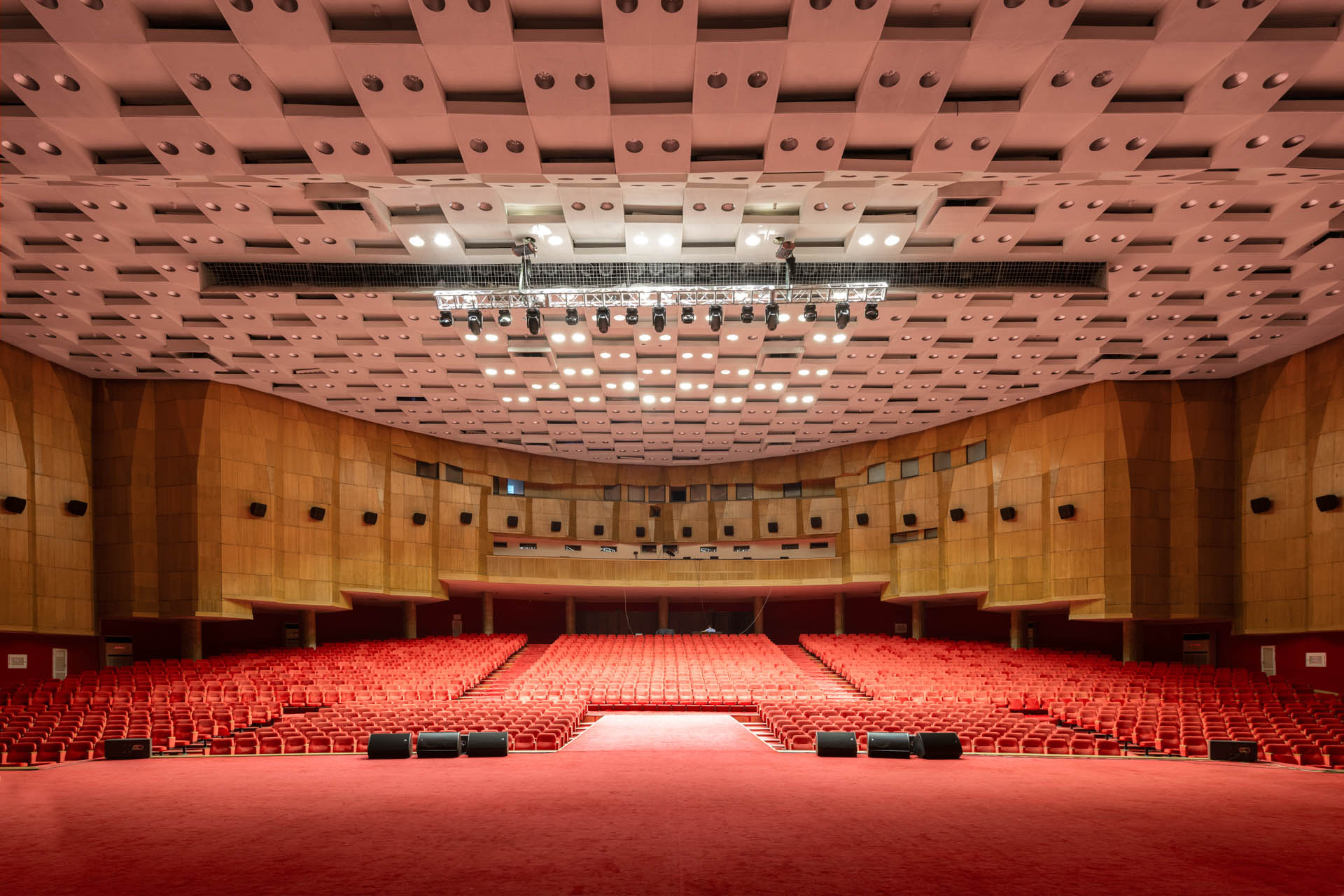
The vision for the Panoramic Cinema extended beyond that of a mere cultural institution. It was conceptualized as a multifaceted project amalgamating three types of venues: a state-of-the-art cinema, a concert space suitable for symphonic orchestras, and a venue for political congresses and conferences.
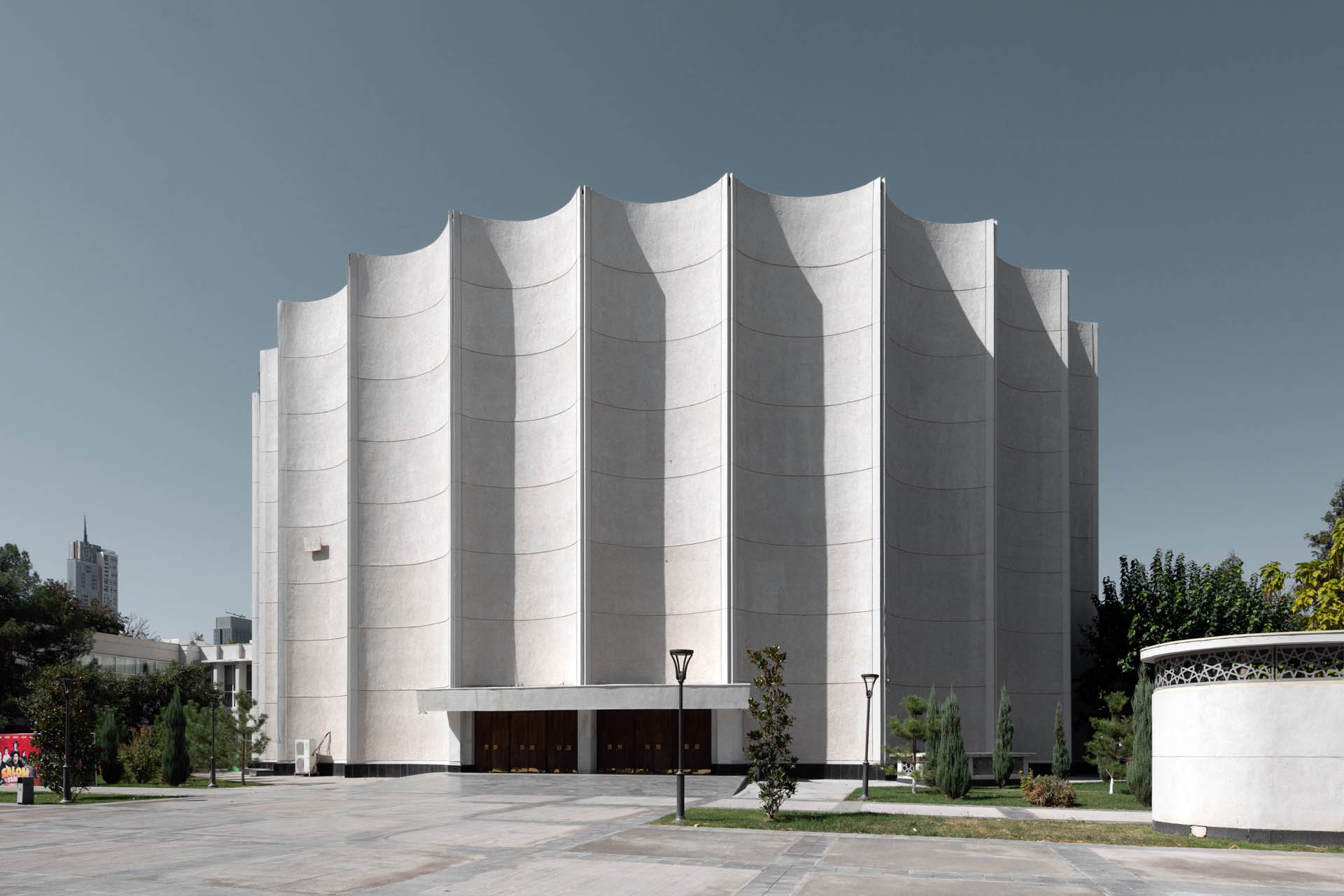
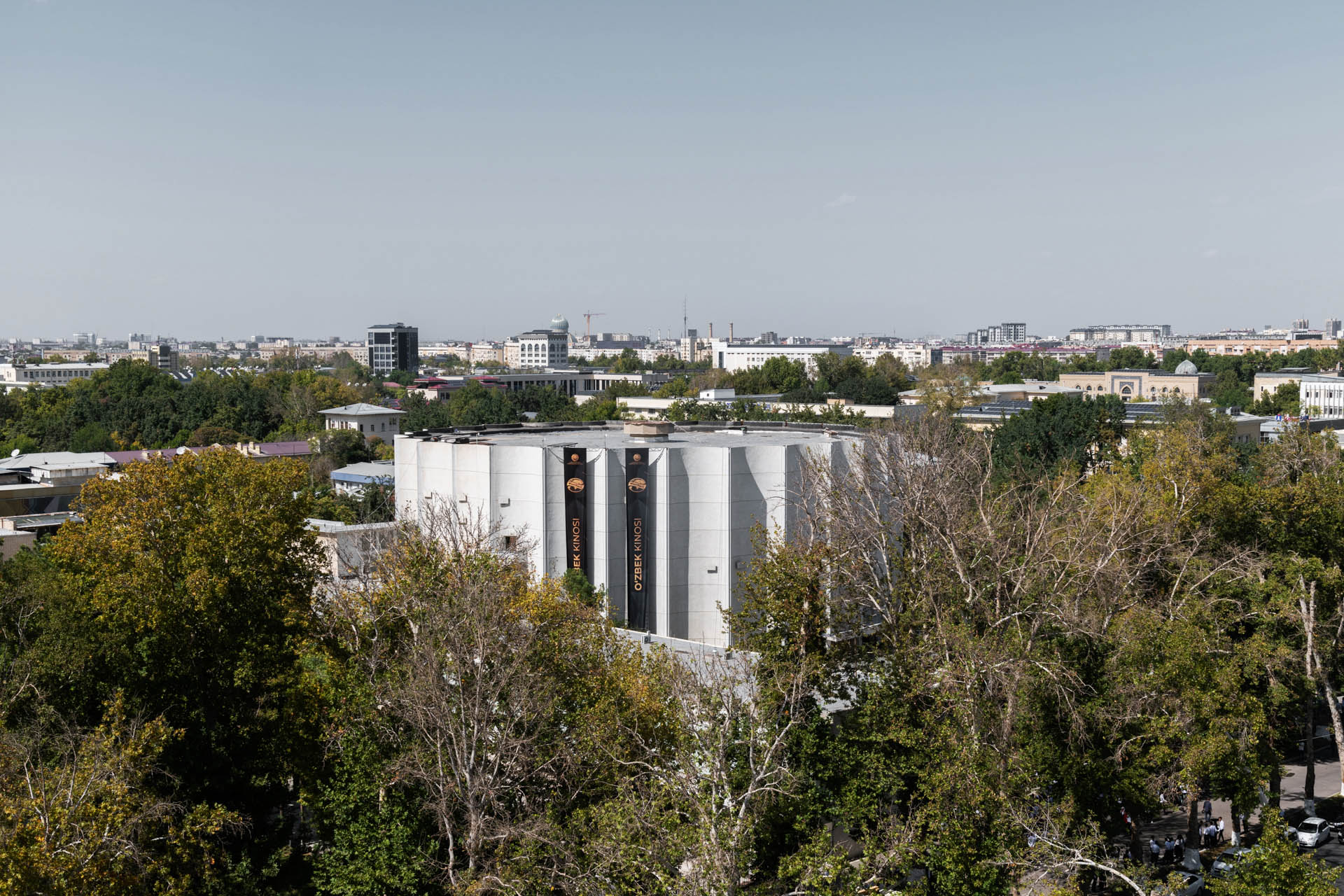
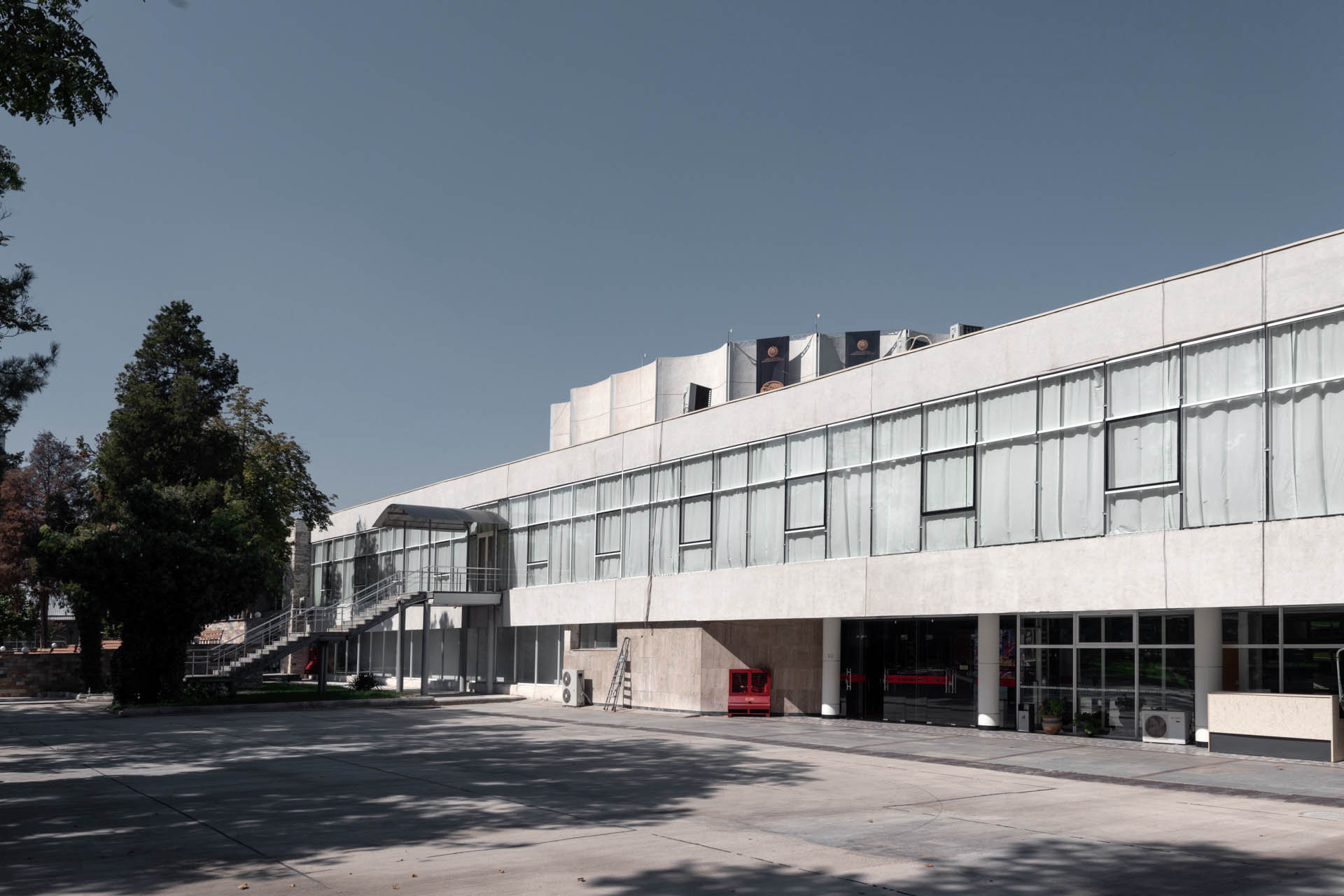
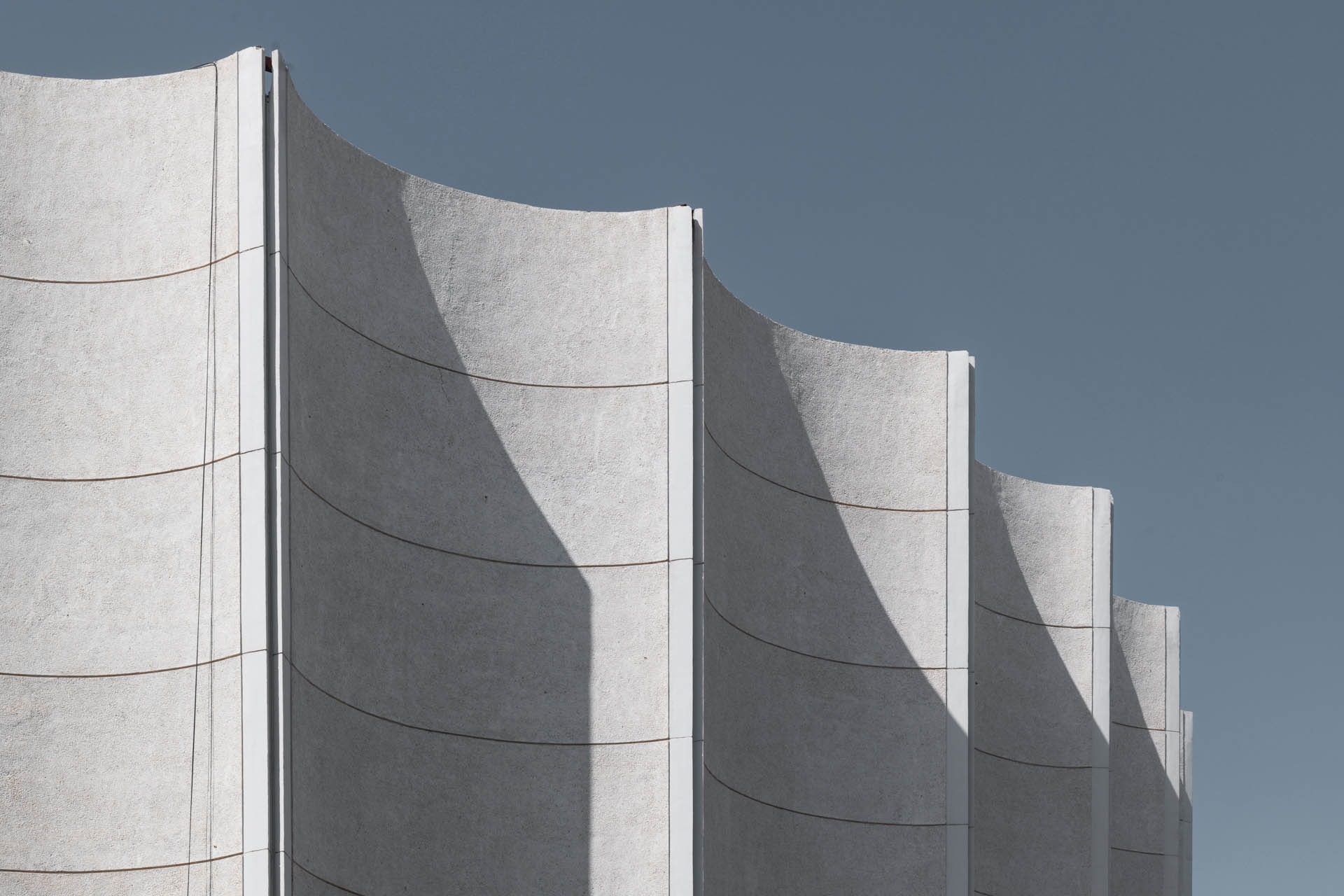
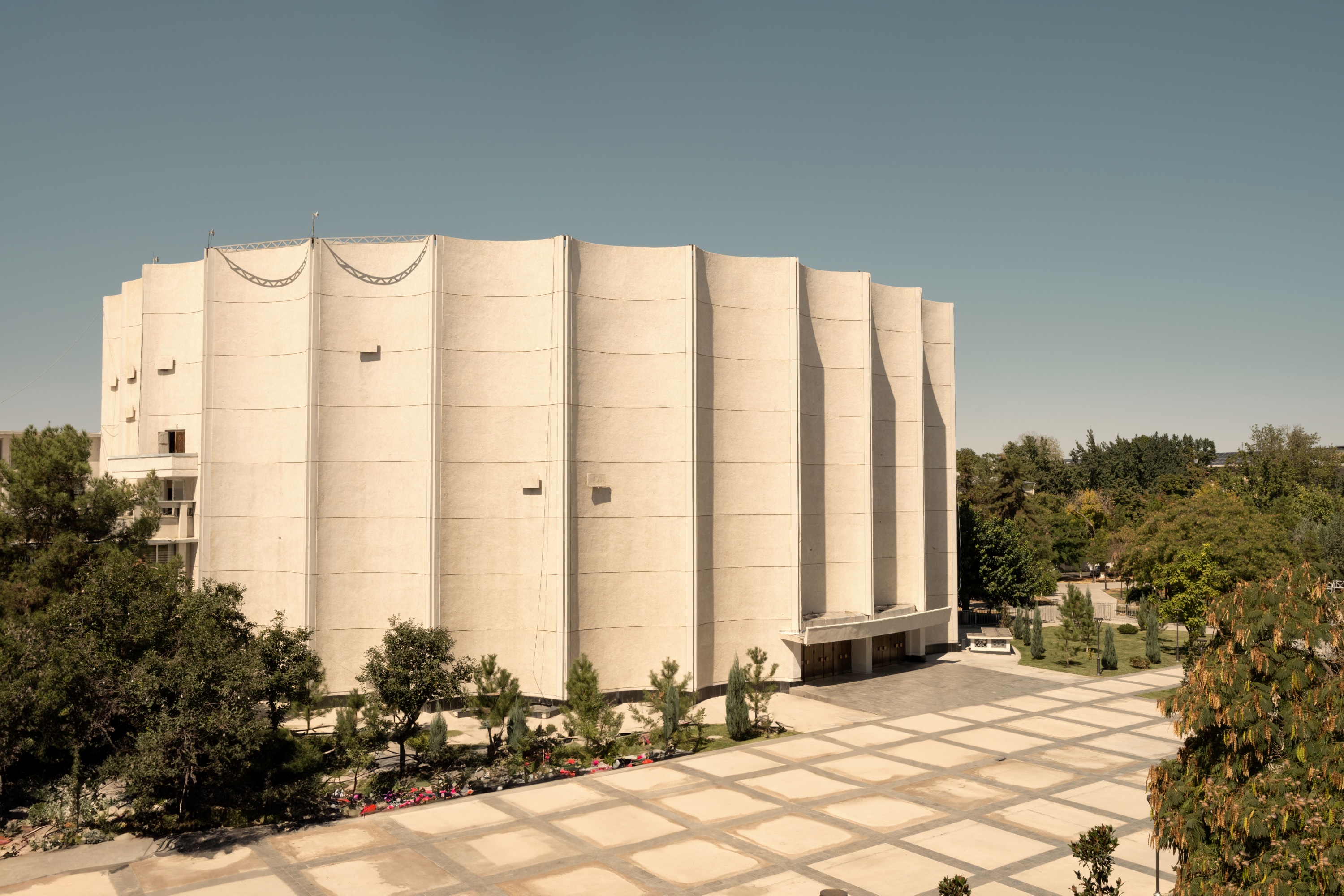
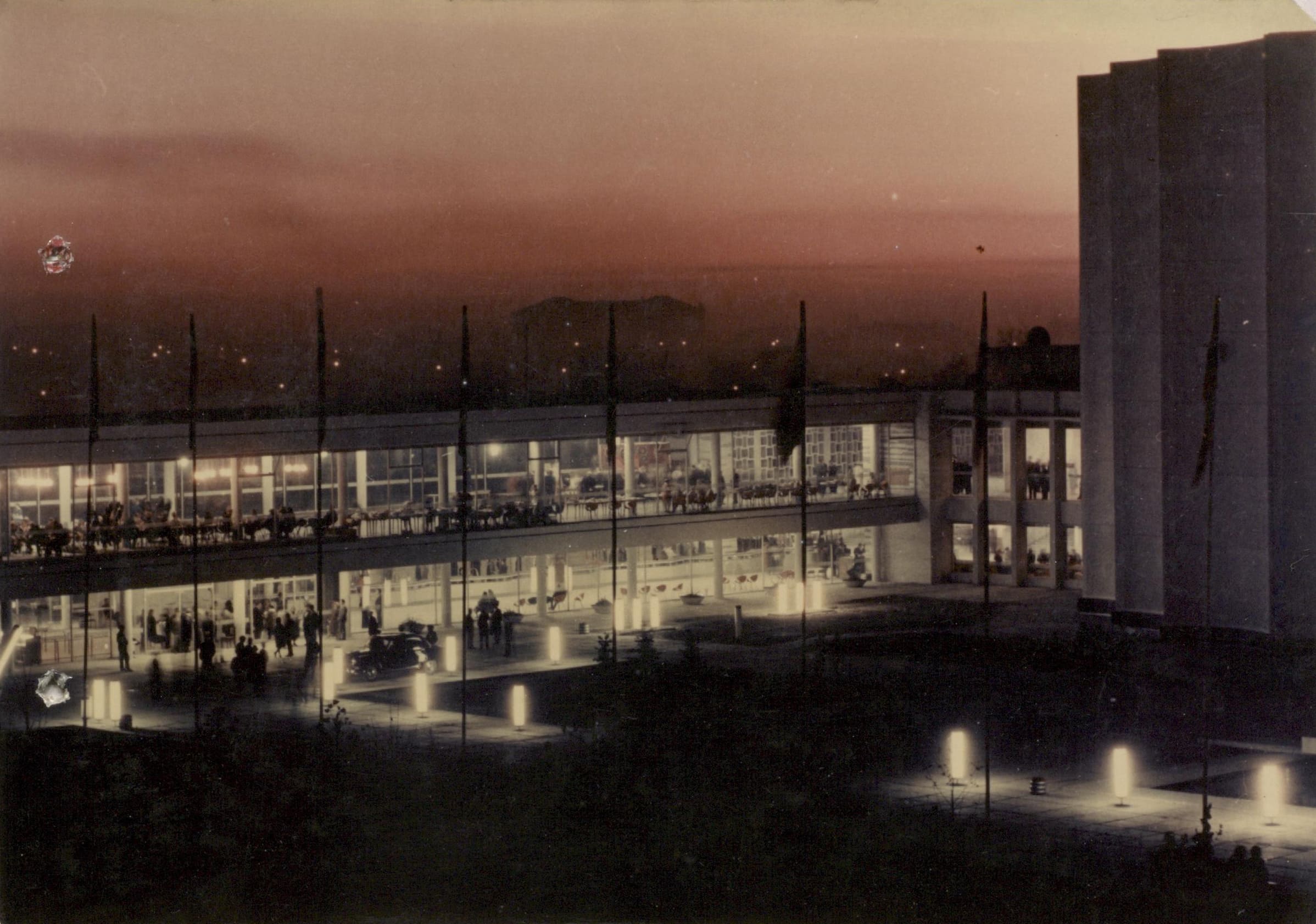
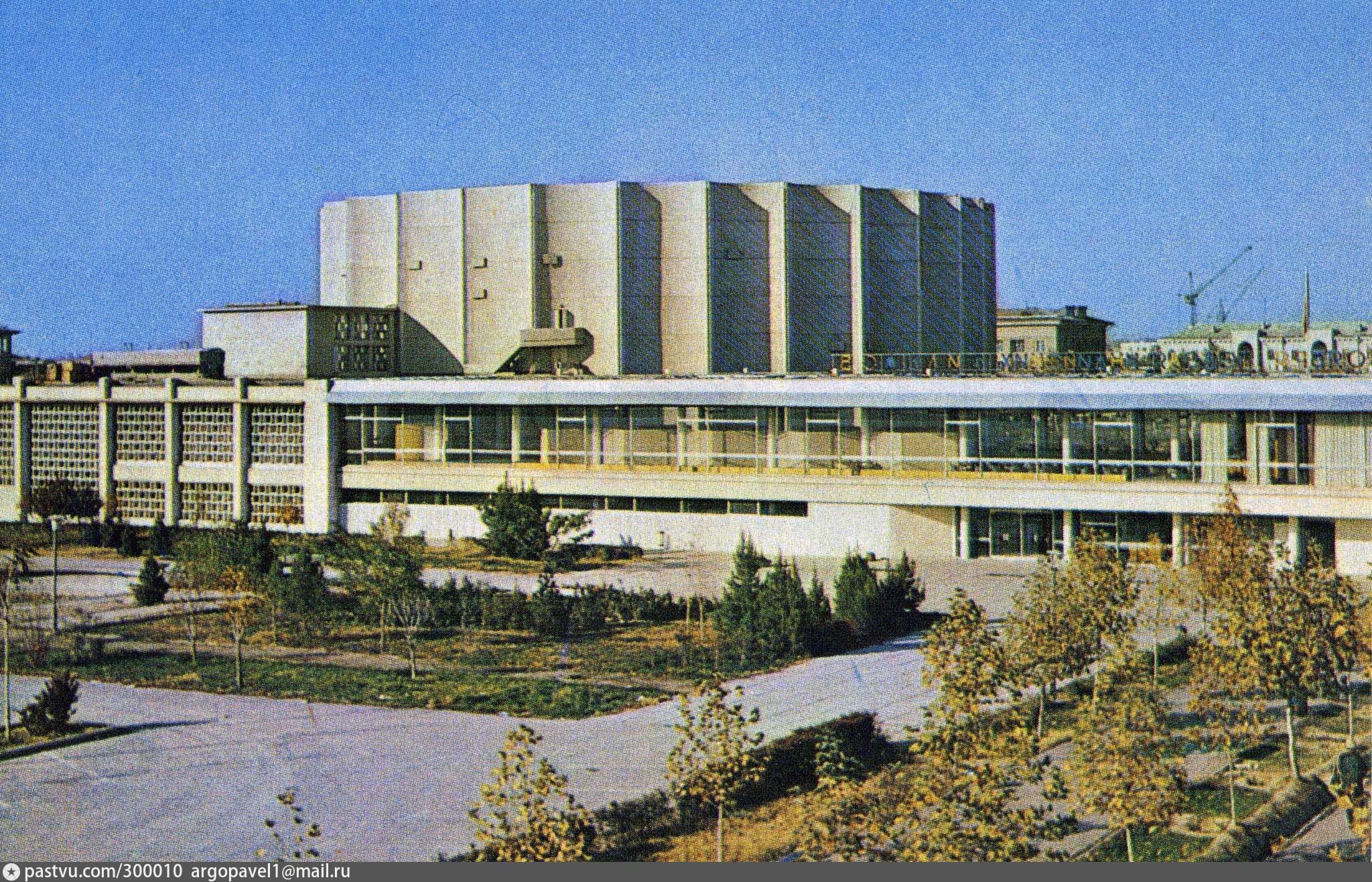
The original edifice consisted of two distinct architectural elements: a two-story, horizontal parallelepiped foyer and a vertical, elliptical cylinder for the main hall. This design achieved a striking contrast—the horizontal block featured ribbon windows rendering it fully transparent, whereas the vertical block showcased solid walls etched with curved grooves evoking the fluting of a Doric column. This architecture, a product of the Khrushchev Thaw era, carried an unmistakably futuristic aura.
A brick wall enclosing the service staircase in the building’s western section held special significance for the architects. Designed to be both decorative and symbolic, this wall incorporated both traditional modernist shapes, like circles, and an unfinished pointed arch laid out in horizontal masonry. Inscribed on the back of a photograph capturing this wall, architect Vladimir Beryozin noted: “Fragment ‘Brick wall with motifs from local archaic.’ The past, the old, yields to new architecture.” The cinema opened in October 1964 and soon evolved into the Palace of Arts. By 1968, it had become the hub of the Tashkent International Film Festival for Asian and African Сountries. Notably, the cinema also garnered the distinction of being the city’s most frequented venue, attracting no fewer than 10,000 daily visitors.
In 1973, plans for redesigning the Palace of Arts and adding a Small Hall were set in motion, primarily to accommodate the 19th Congress of the Communist Party of Uzbekistan. The renovation mirrored the shifting zeitgeist—a quest for lost cultural roots and a re-engagement with “shadows of forgotten ancestors,” causing the past’s newly illuminated contours to overshadow the increasingly nebulous visions of the future. Architect Sergo Sutyagin, who had been a part of the original design team alongside Vladimir Beryozin, Yuri Khaldeev, and Dmitry Shuvaev, spearheaded the renovation. Preserving the modernist language of the original building, he ingeniously incorporated new structures that echoed his evolving creative priorities.
Geometrically, the new addition aligned with the original building only in terms of the foyer’s width and the new hall’s southern extension. To address the issue of material inconsistency, the architect deliberately avoided detailing on the new building’s eastern façade. Its travertine wall thus served as a neutral backdrop for the intricately designed two-story foyer of the 1960s. Inside, however, the collision between the new and old aesthetics was palpable, each penetrating yet not blending with the other.
The juxtaposition of the original building’s concrete cylinder and glass parallelepiped continued to signify Tashkent architects’ aspiration to integrate into the global context and align with the International Style. The second building of the Palace of Arts presented a stark antithesis: it countered universalism with regionalism, a detachment from context with a deep-rootedness within it, and futuristic dreams with metaphysical contemplation.
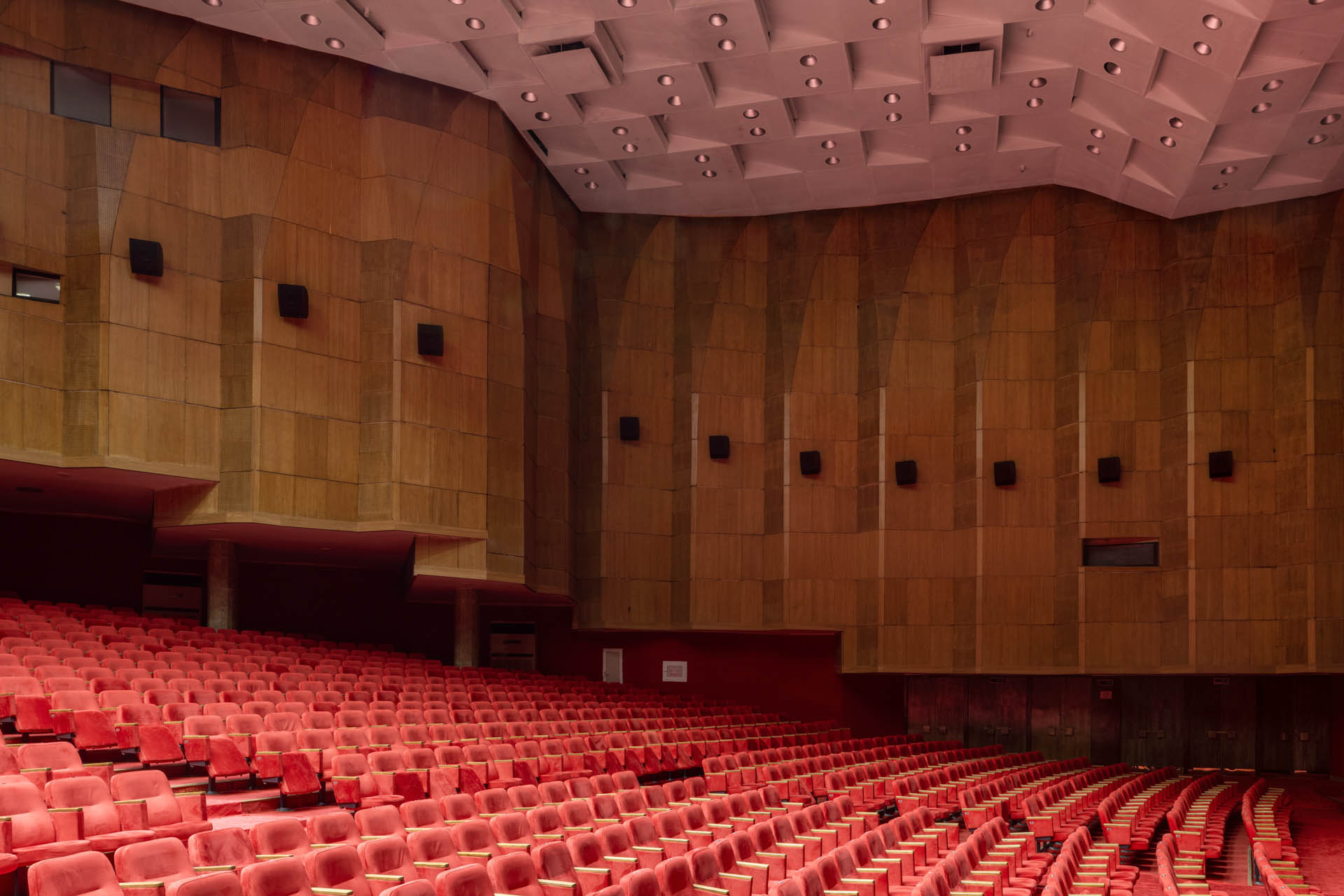
Construction concluded in 1976, but a catastrophic fire engulfed the Palace just three and a half months before the opening of the Congress. The Soviet government promptly allocated funds for urgent repairs. In a span of three and a half months, the building underwent another round of renovations, which included the replacement of damaged engineering networks and equipment, the installation of new Hungarian-made chairs, a complete floor replacement, and the repainting of a fresco.
In the 2000s, the Palace underwent unauthorized renovations by its then-owner, despite its protected status. During this period, four additional halls were constructed in the second-floor foyer, and more halls appeared in the first-floor foyer and the basement. When the ownership was transferred to the National Agency Uzbekkino, new renovation plans emerged. However, a concerted public effort successfully halted these unplanned reconstruction activities.
Modern Photos