
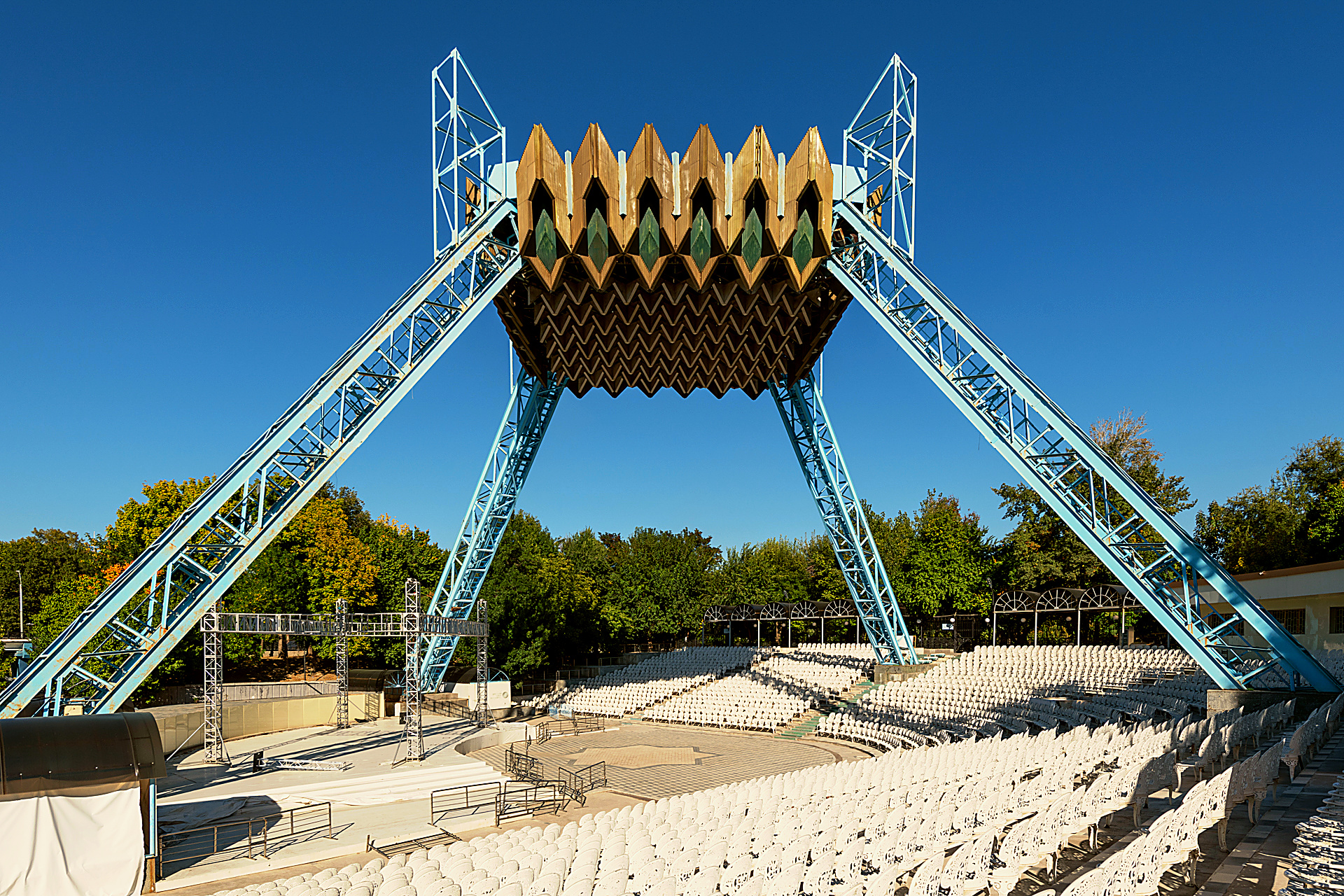
Arena of the Turkestan Palace
ARCHIVE PHOTOS
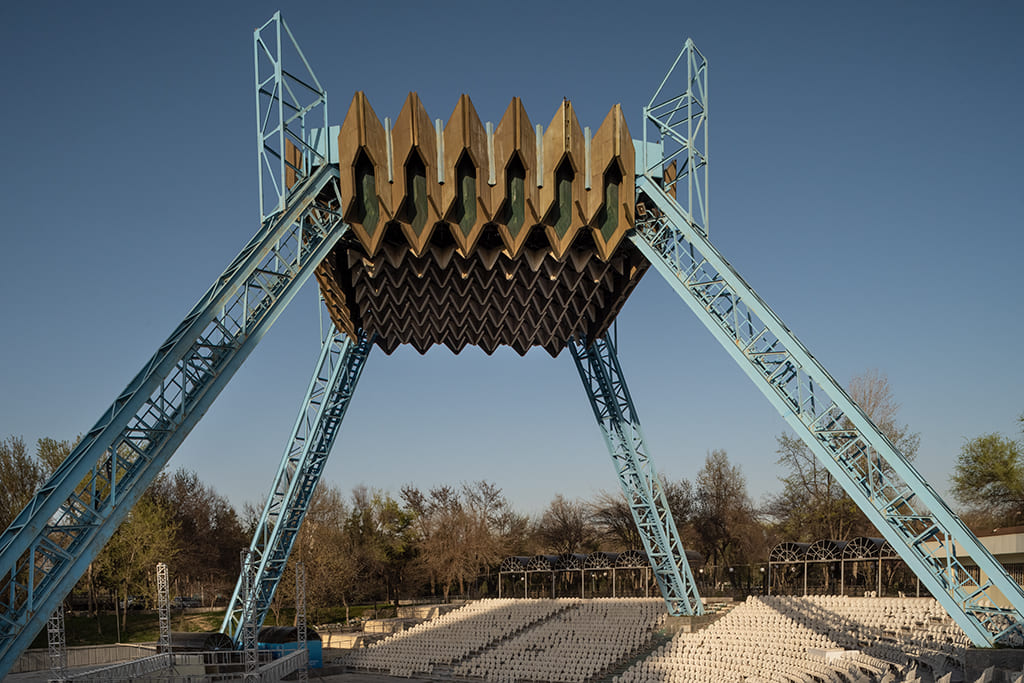
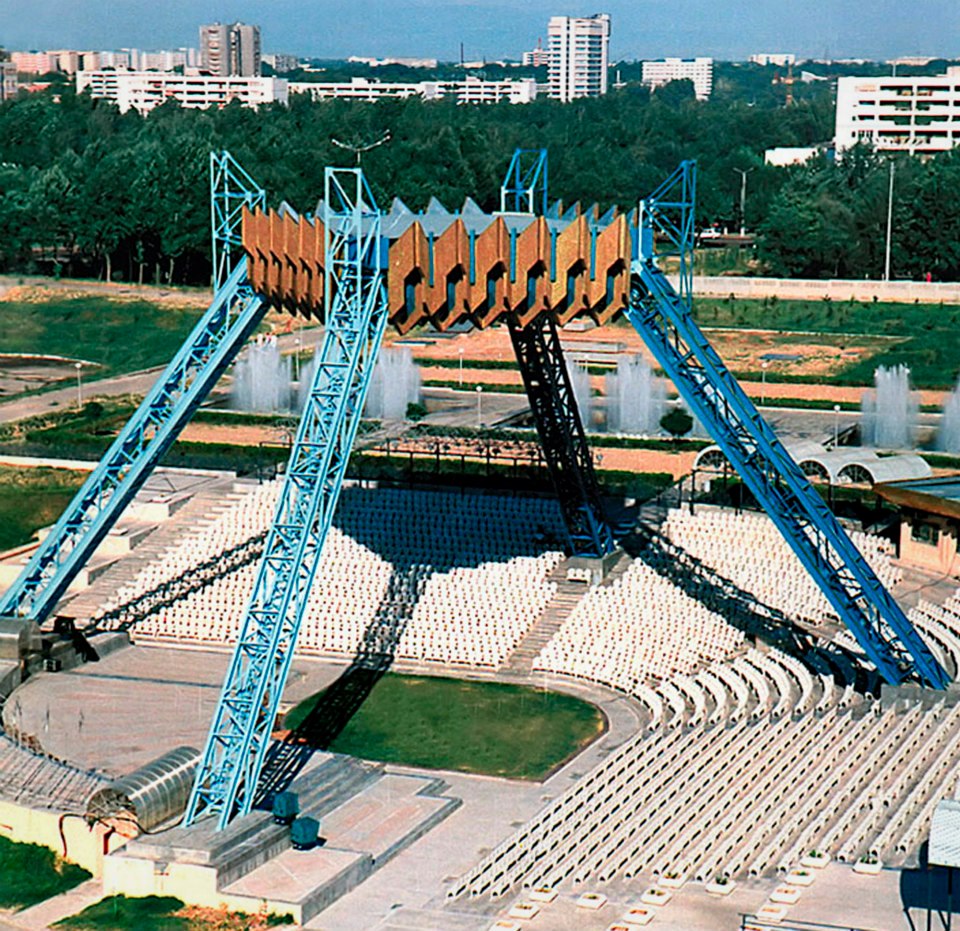
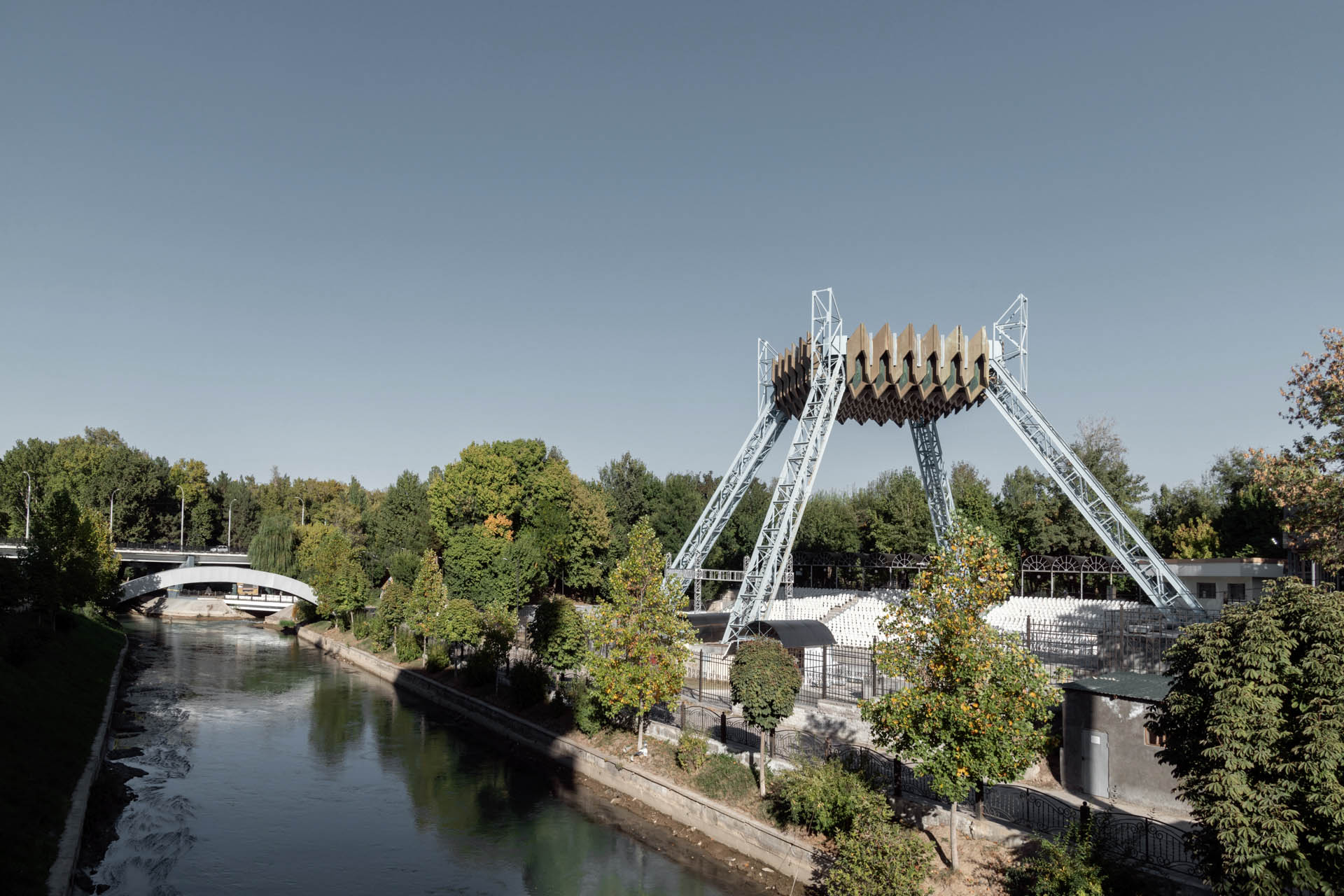
The summer arena of the Turkestan Palace was erected in an area where, until 1865, a fortified citadel known as Urda stood. From this citadel, the Kokand governor ruled Tashkent until the Russian conquest. In the post-1937 Soviet master plan for Tashkent, the area formerly occupied by Urda was designated as a segment of a larger green belt stretching along the Ankhor Canal from the city’s north to its south. The construction of the Turkestan Palace and its adjoining open-air arena strategically transformed the space between a highway and Navoi Street, imbuing it with cultural significance while simultaneously revitalizing this park area.
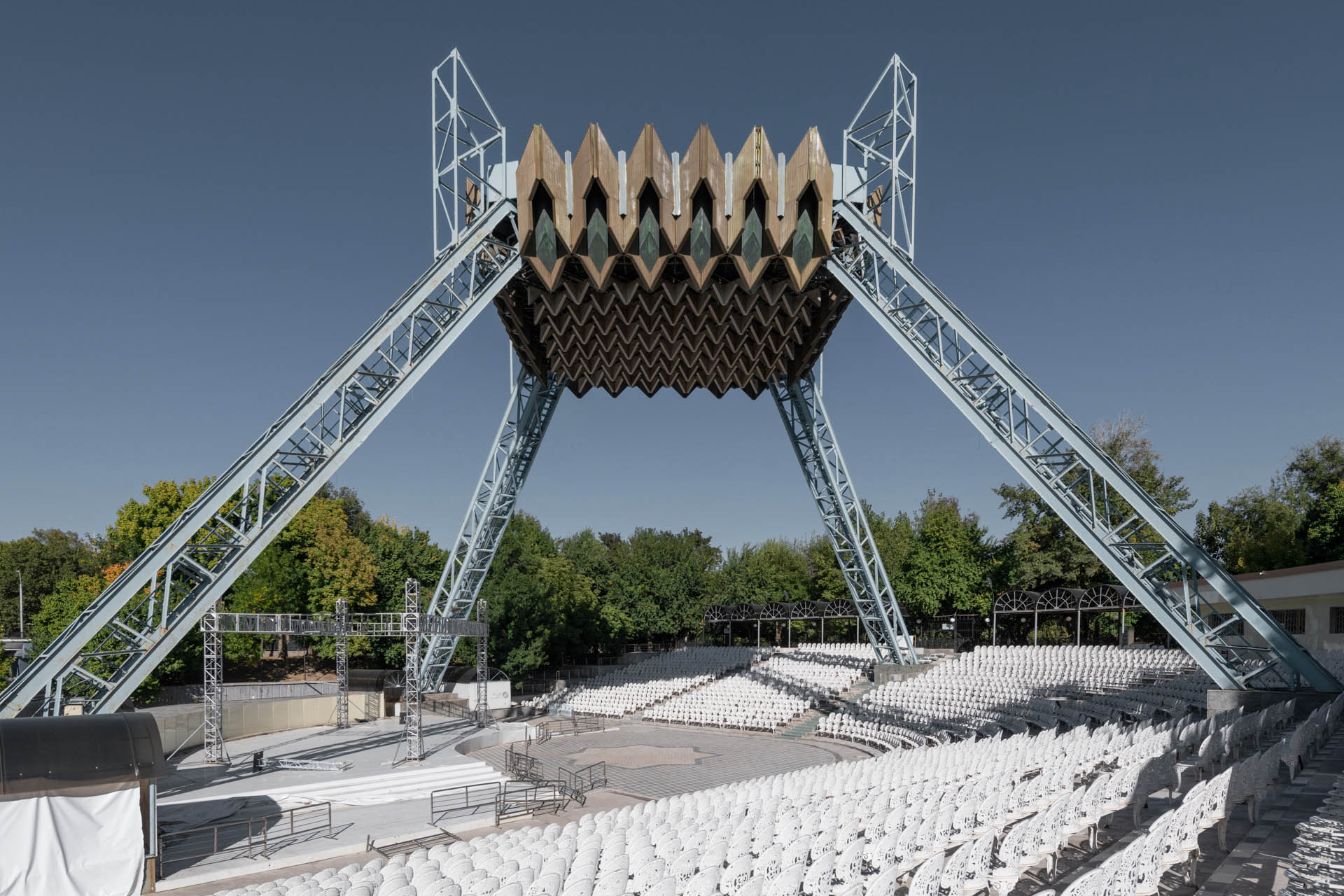
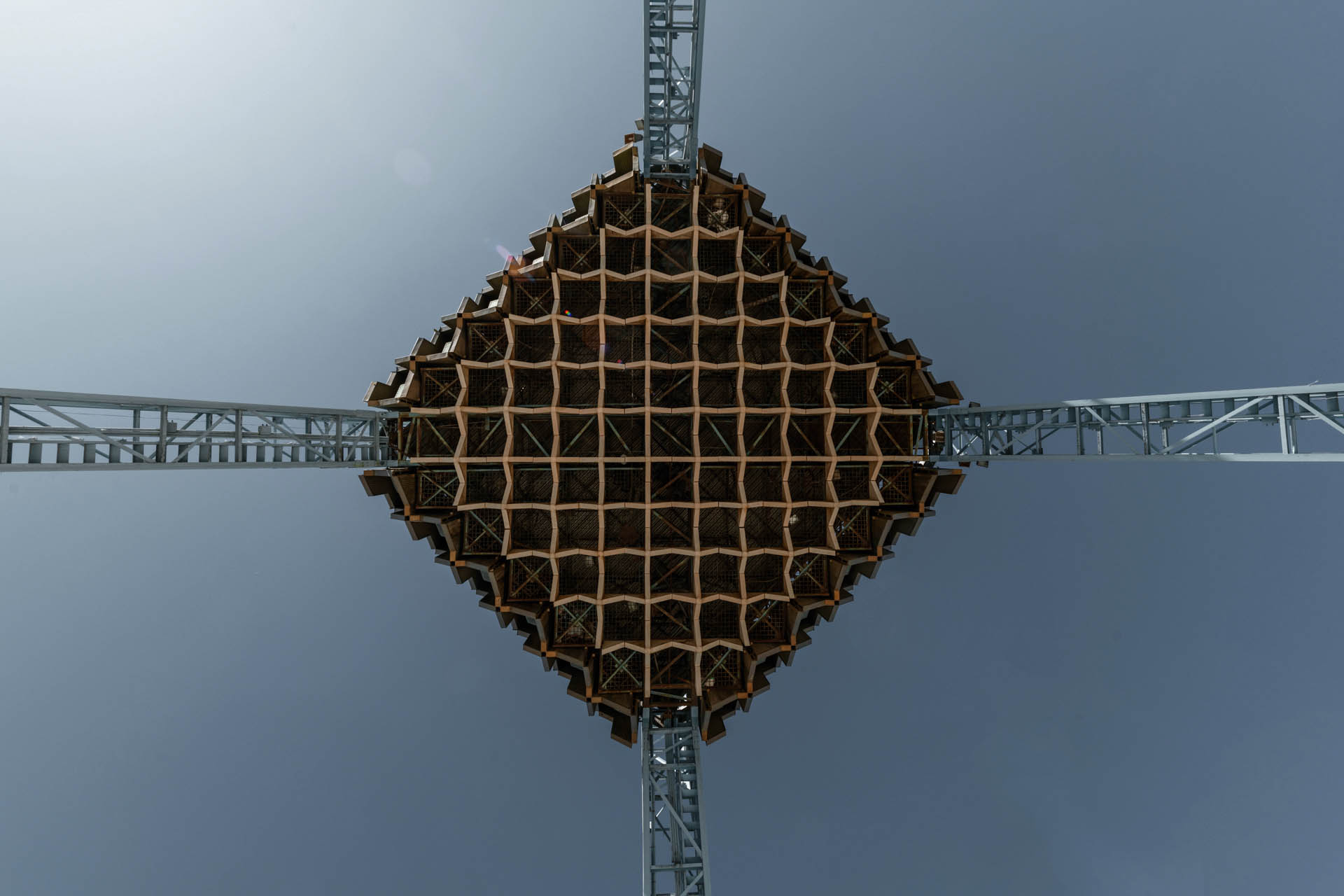
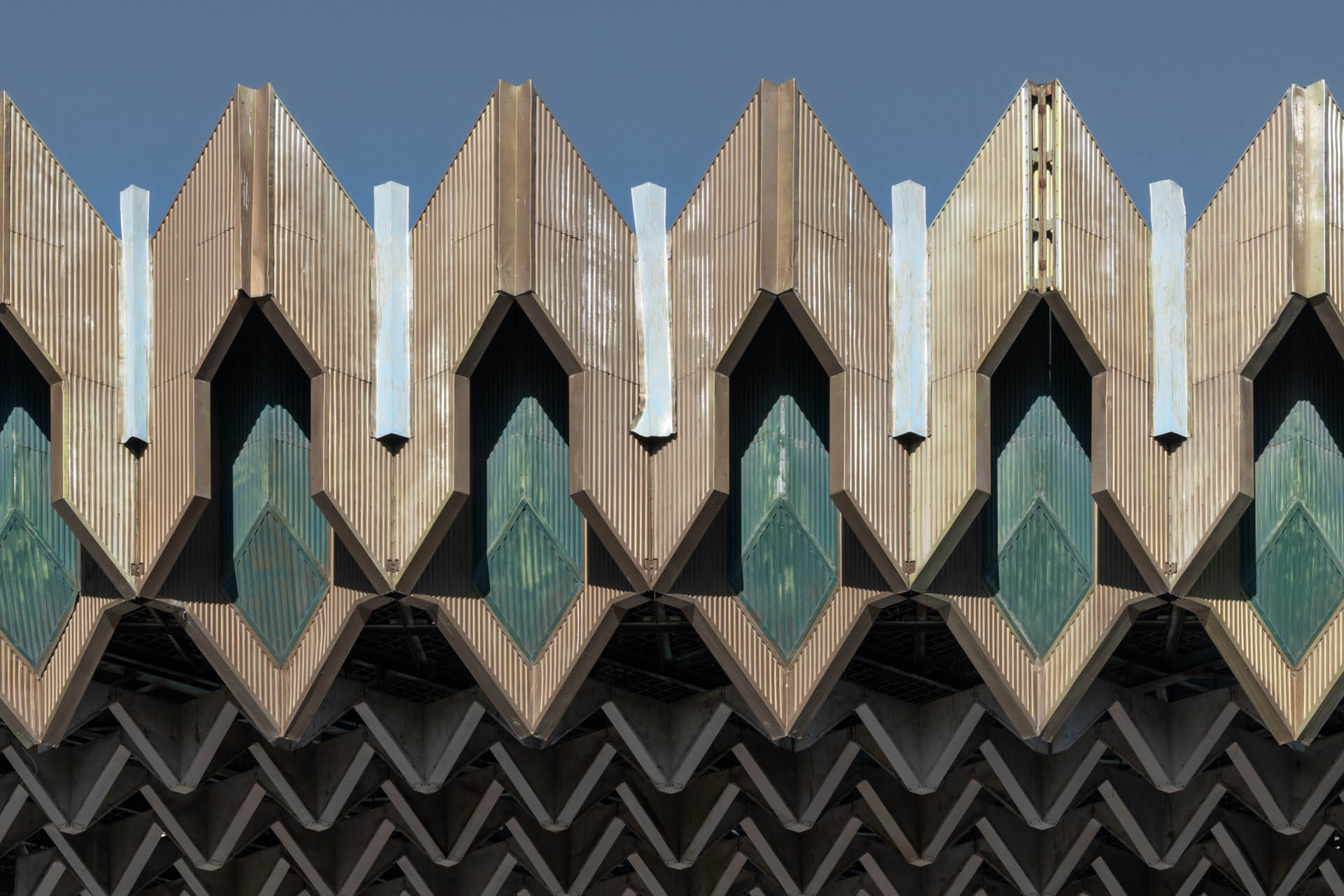
Initiated in 1981, the architectural vision, brought to life by Valery Akopdzhanian and Yulia Zakirova-Akopdzhanian, entailed the construction of an open-air theater pavilion at the heart of this verdant space. The design included four symmetrically positioned cantilevered grandstands. Intersecting these, along the pavilion’s diagonal axes, stood four mast supports that converged over the stage into a unified metallic structure. From a structural standpoint, it interconnected the supporting masts and lent rigidity to the overall construction; functionally, it acted as the mounting point for lighting and other specialized stage equipment.
The architects were tasked with creating a novel theater type capable of accommodating traditional Central Asian performing arts—ones that demanded open spaces and specific scenic elements. Traditionally, such folk spectacles were primarily conducted in bazaars, bereft of any specialized settings or stages, leaving no architectural precedents for the design of this unique form of folk theater.
However, the project was put on hold, resurfacing only in the early 1990s upon the nearing completion of the adjacent Turkestan Palace. While maintaining the square composition centered on the four converging masts, the architects swapped out the original four grandstands for a semicircular amphitheater that sloped gently toward the river. This modification led to a loss of symmetry but endowed the composition with a more fluid, harmonious integration into both the existing topography and the broader urban context. Post-construction, the arena saw active use, most notably during Independence Day celebrations. Yet, with the subsequent construction of a new venue in Alisher Navoi Park, the complex’s utilization waned. Today, the arena endures in a condition that can be described as relatively authentic.
Modern Photos