
Kosmonavtlar Metro Station
ARCHIVE PHOTOS
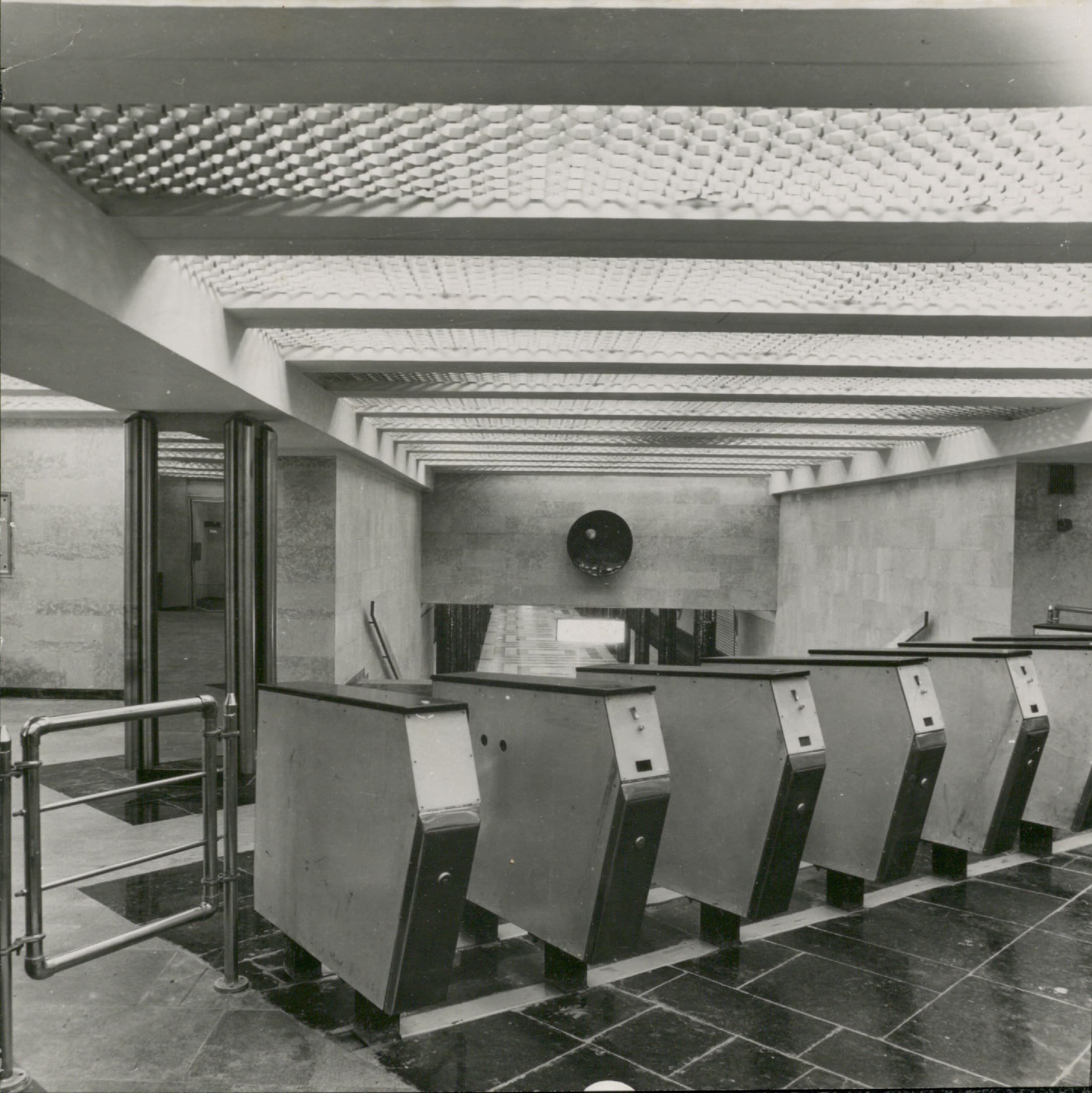

Inaugurated in 1977, Tashkent’s metro system was the first in Central Asia. The design of its initial line emphasized a blend of diverse architectural and monumental elements, marrying baroque-like exuberance with modernist simplicity.
Led by architect Sergo Sutyagin, the Cosmonauts Avenue station was built on the metro’s second line, which opened on December 7, 1984. The station draws its name from Cosmonauts Avenue where it was situated, an avenue itself named in honor of Vladimir Dzhanibekov, Uzbekistan’s first astronaut and a native of the Tashkent region.
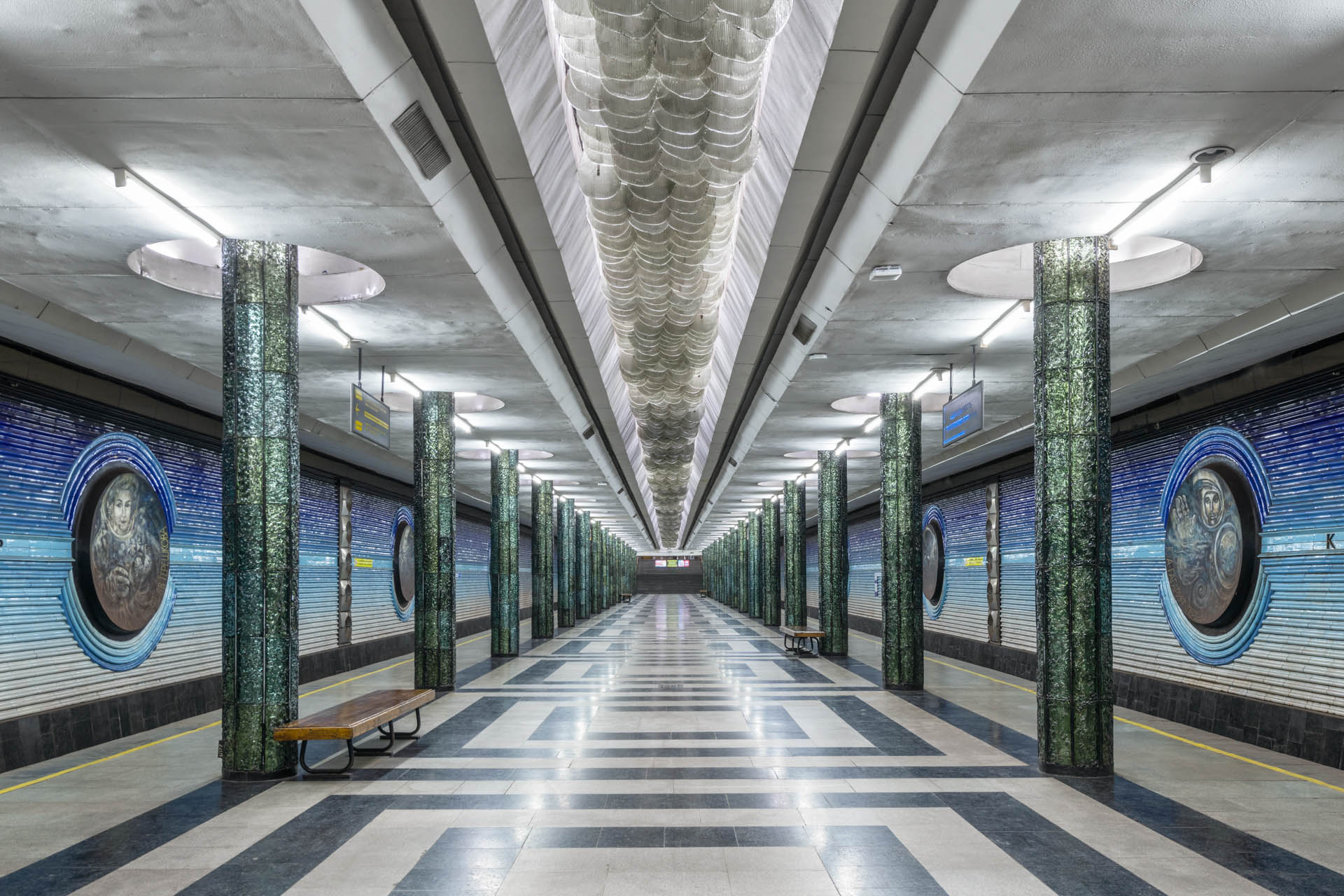
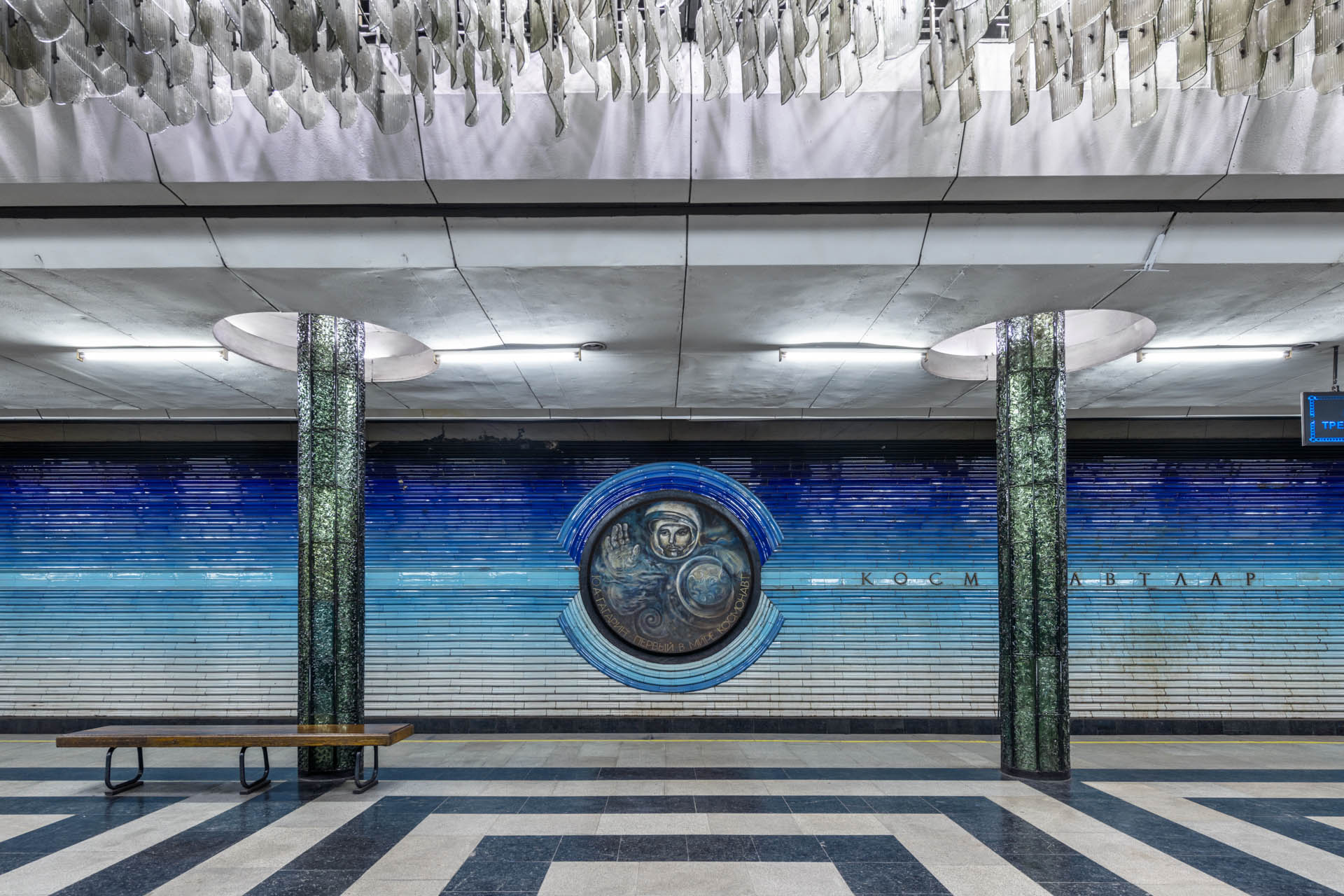
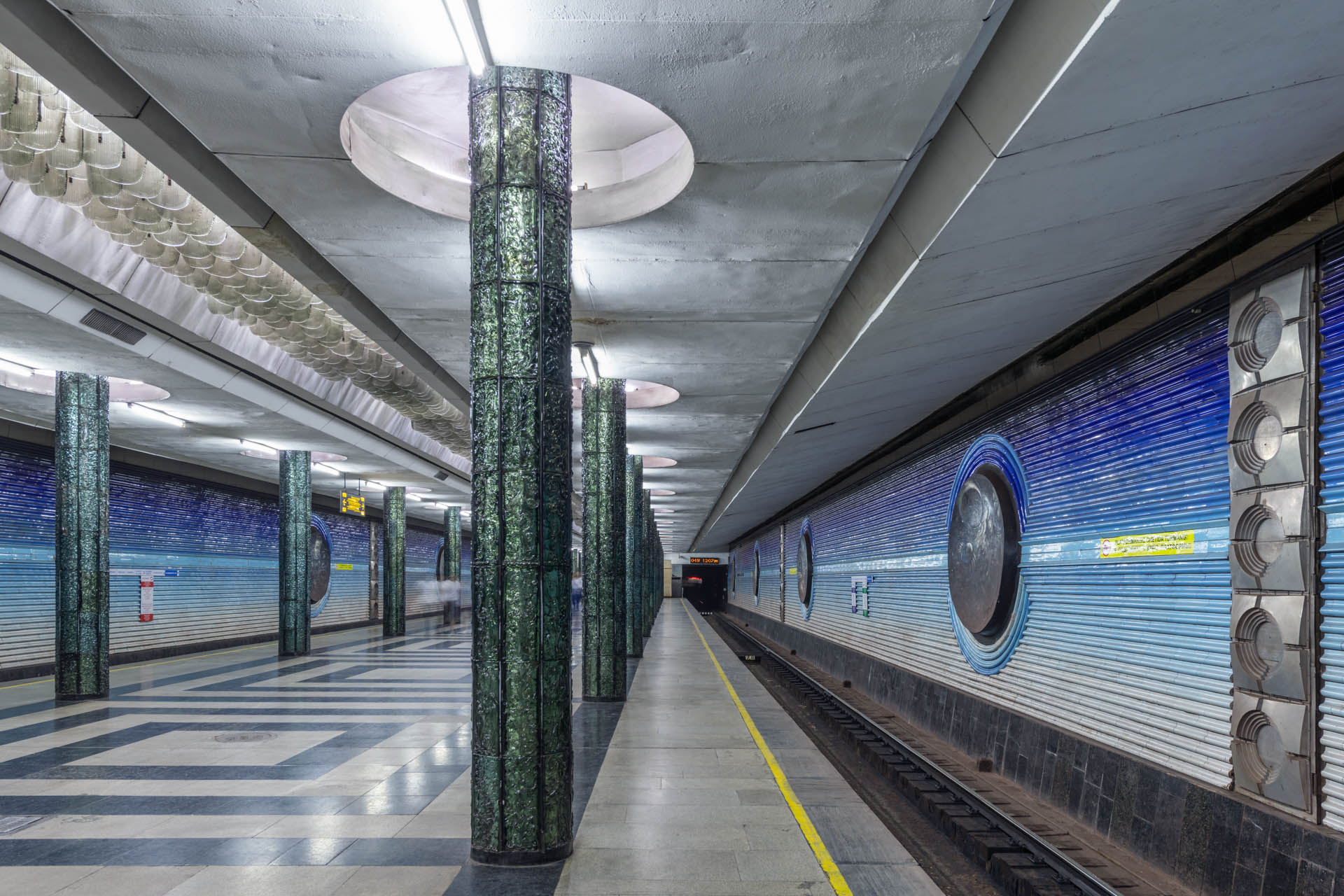
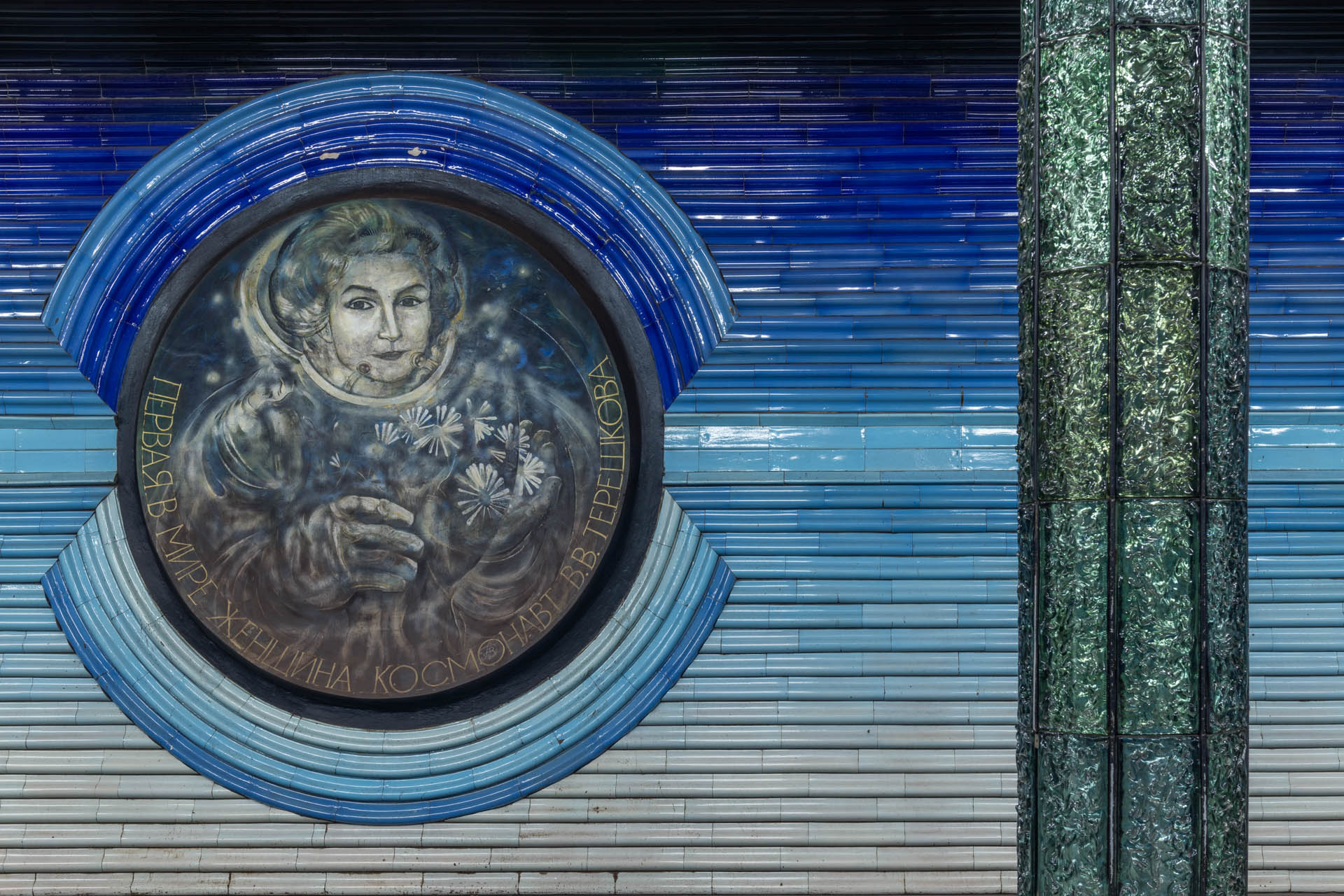
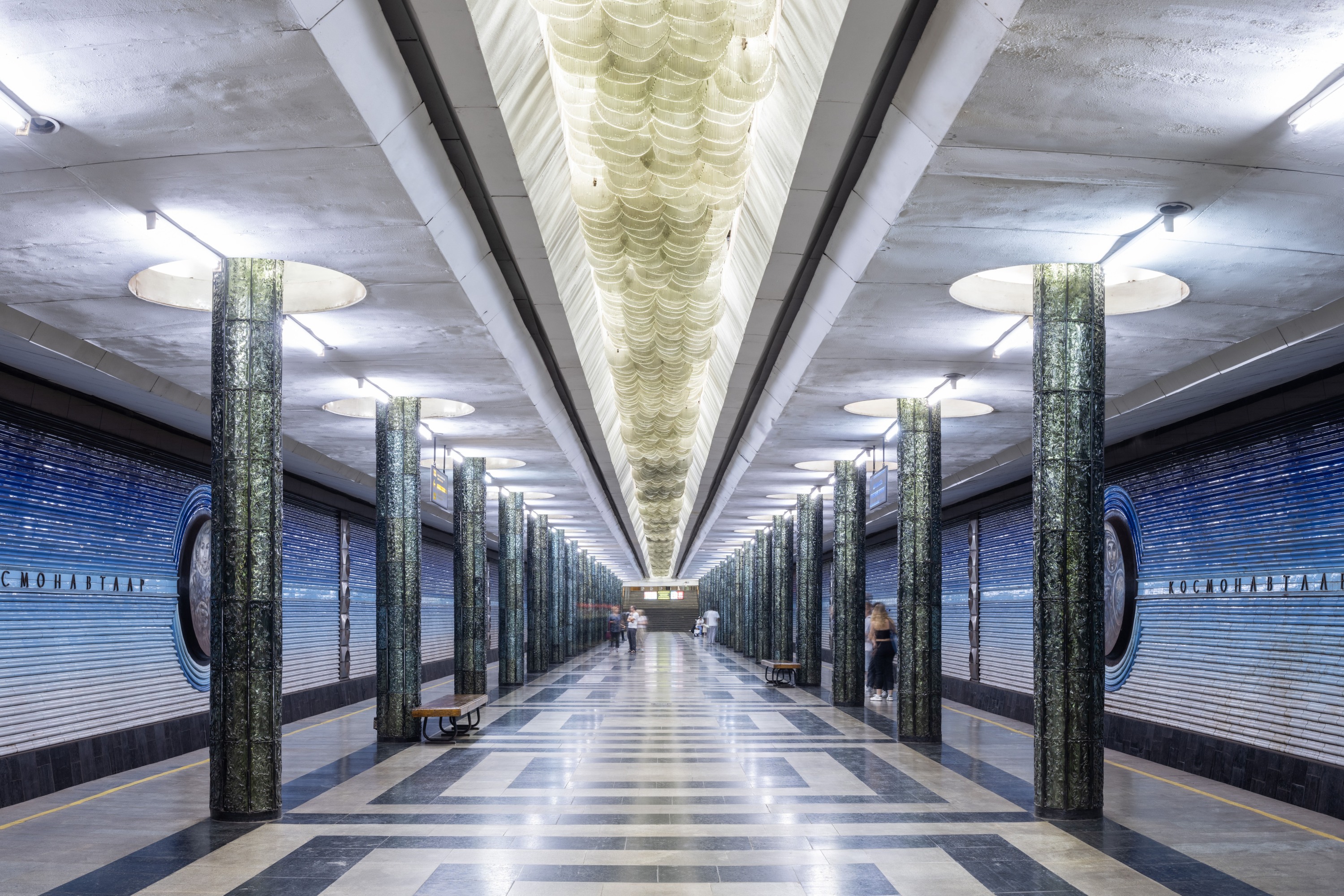
The station’s aesthetic is steeped in cosmic themes: a chandelier, extending the full length of the ceiling, metaphorically represents the Milky Way, while the walls are decorated by twelve medallion frescoes, each capturing a seminal chapter in the quest to explore and conquer space. The narrative begins with mythology—a fresco of Icarus appears among the earliest. This is followed by the prehistory of space travel, starting with Ulugh Beg, the sultan of Samarkand and astronomer, and proceeding to space theorists Konstantin Tsiolkovsky and chief designer Sergey Korolev. Next come frescoes of Yuri Gagarin, the first cosmonaut; Valentina Tereshkova, the first female cosmonaut; Alexey Leonov, the first cosmonaut to walk in space; and lastly, Vladimir Dzhanibekov, the station’s indirect dedicatee. Closing the visual gallery are frescoes devoted not to individuals but to seminal events: one commemorates the first lunar rover, another the Soyuz-Apollo mission, and a third the Interkosmos program that initially united astronauts from socialist countries and later from other nations visiting the Soviet manned stations Mir and Salyut.
Another standout feature is the station’s mosaic wall cladding, made up of custom-designed elements. These elements are arranged in horizontal rows, forming a color gradient that begins with white and concludes with the darkest shade of ultramarine. According to Sergo Sutyagin, the gradient aims to invoke the sensation of boundless space, dissolving into darkness.
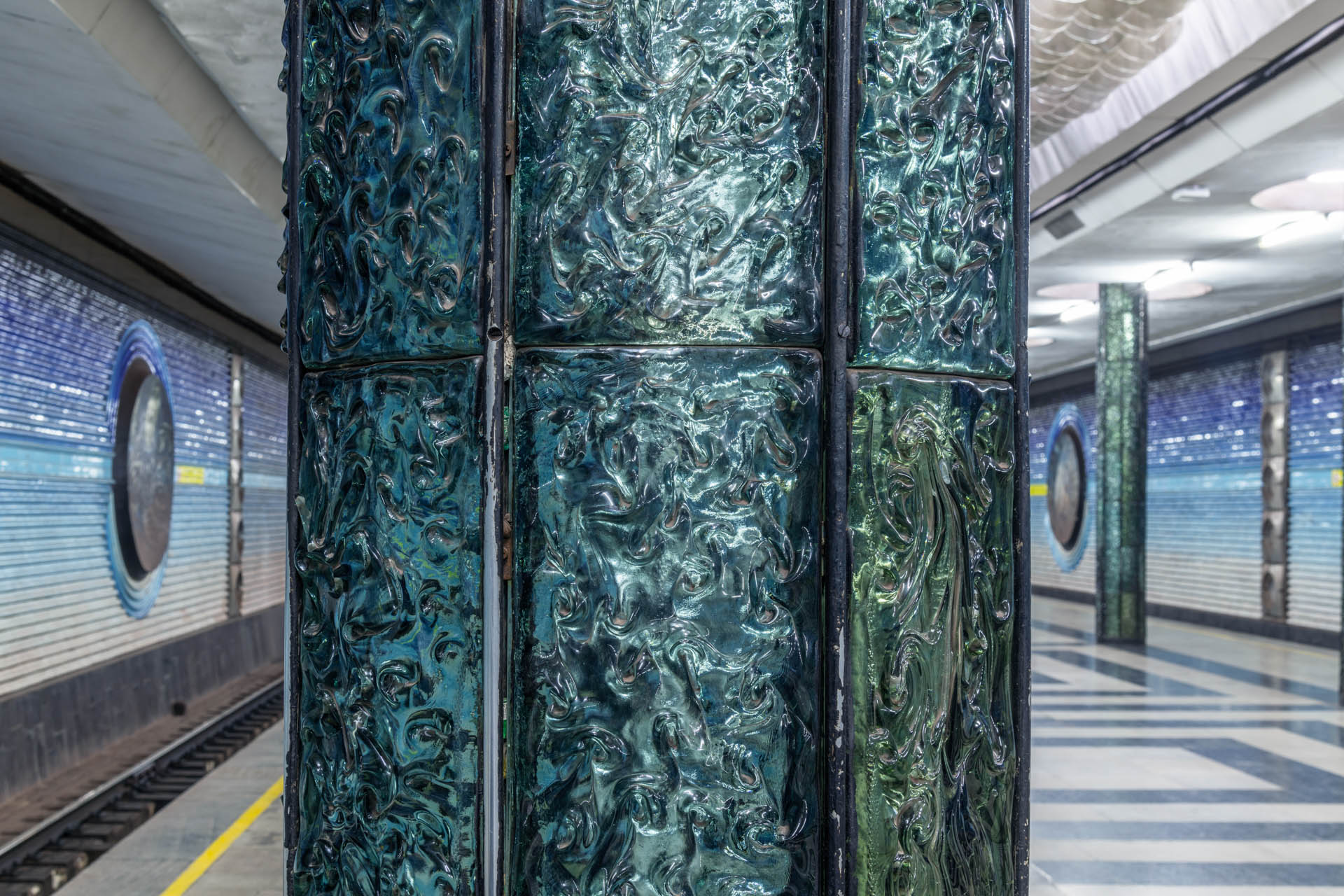
To enhance the sense of spatial expanse, the station’s standard height was increased by 60 cm, and the thickness of the structural columns was reduced. Cloaked in glistening dark glass, these columns almost lose their material presence, while the hovering mass above takes on an ethereal, weightless quality.
Despite a few critical voices, the station emerged as an instant “architectural hit” and garnered high praise from experts. Since Uzbekistan’s independence, and the ensuing influx of foreign architects to Tashkent, the station has made frequent appearances in architectural publications, lauded for its stringent modernist aesthetics. In 1992, it was renamed “Kosmonavtlar,” in Uzbek.
Interestingly, the station’s cosmic theme serves not to anticipate the future, but to memorialize the past. Gone is the buoyant utopianism of the Khrushchev Thaw era; in its place is a metaphysical realm imbued with melancholy and nostalgia. The focus is not on what lies ahead, but on what has been. The “museumified” milestones of space history—from Icarus to today—act like a pantheon, allowing the past to overshadow the present and rendering the future less significant by comparison to the seminal acts of space exploration history.
Modern Photos