

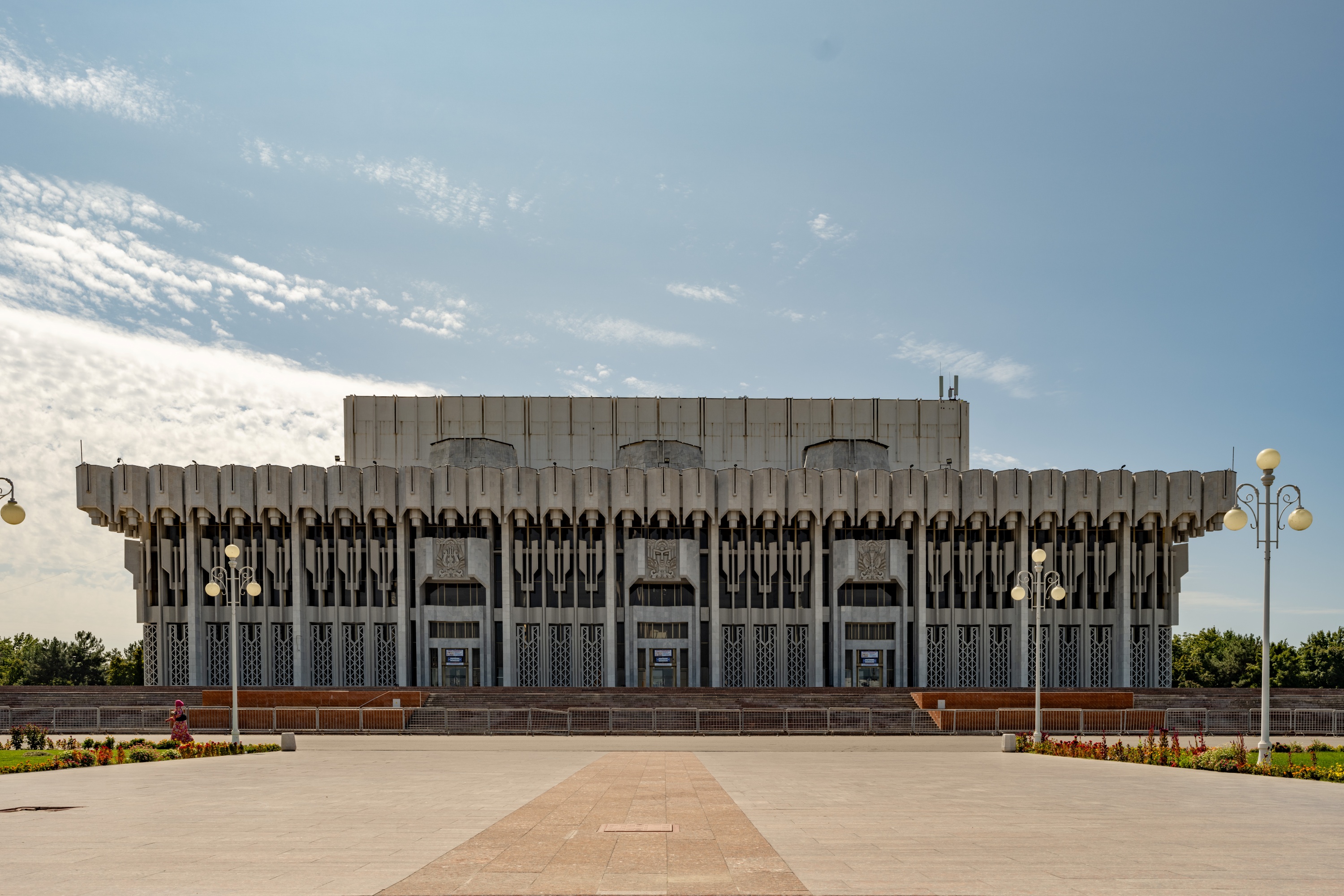
Friendship of Peoples Palace
ARCHIVE PHOTOS
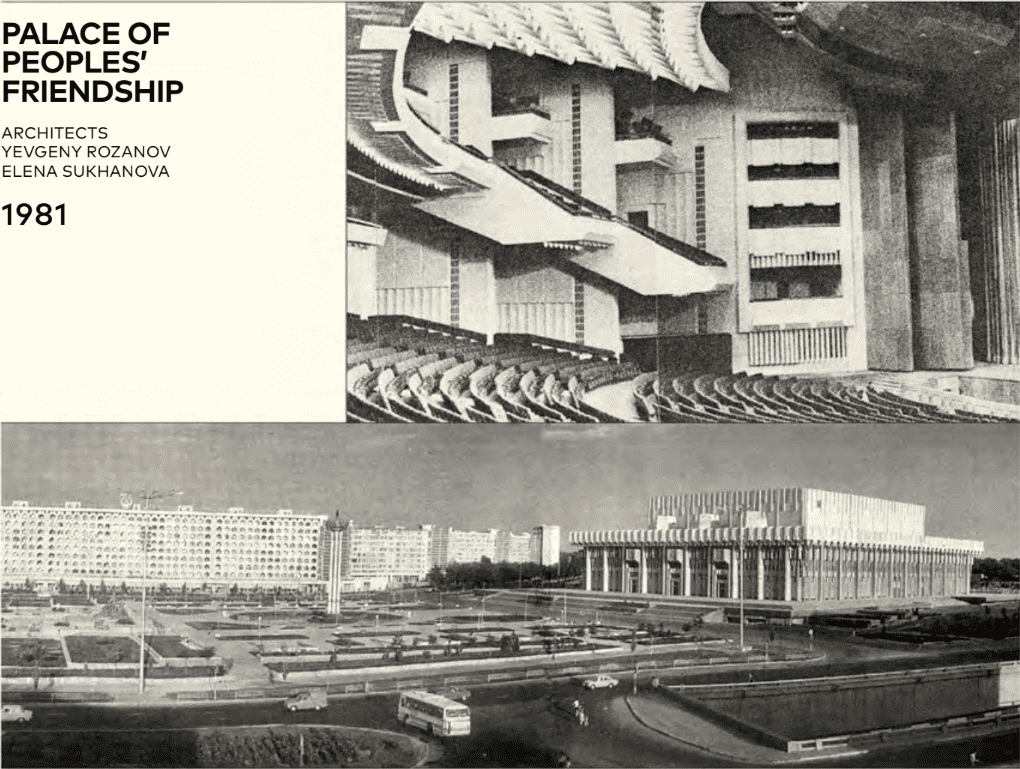
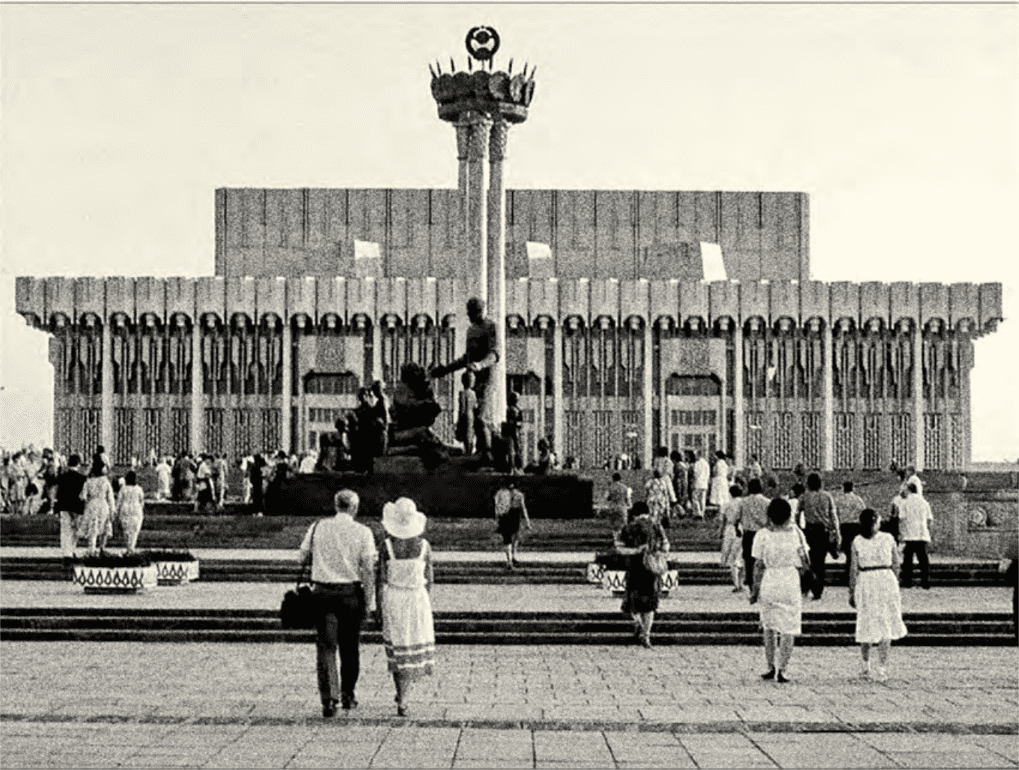
The Palace belongs to a specific Soviet programmatic type: a building combining the functions of a congress hall for Communist Party summits and a concert hall for large representative ceremonies and performances. The prototype for this type was the Kremlin Palace of Congresses, designed by architect M. Posokhin and built in 1961. In the following two decades, many Soviet capitals erected similar buildings, required to be representative of Soviet power, characterised by symmetry, monumental scale, abundant décor, and variable degrees of privacy. In 1970, for the centenary of Lenin's birth, Alma-Ata built the Palace of Lenin, which received the State Prize of the USSR in 1971. The Palace of People's Friendship in Tashkent — a city that competed with Alma-Ata for the primacy in Central Asia — had to surpass its precedent in scale, with a 4,100-seat auditorium instead of Almaty's 3,000.
The building stands on the southern bifurcation of Furkat Street, the primary north-south urban axis, with the State Circus at the opposite northern end. It is placed at the back of the square, raised on a podium, with a symmetrical layout aligned to the central axis of People's Friendship Square coinciding with Furkat Street. The Palace's façade plays with variable degrees of visibility from the outside by means of panjara-like sun screens of different scales. The honeycomb elements crowning the building recall the Islamic muqarnas, while panjara-like elements screen the lower part of the façade. The extensive and repetitive use of prefabricated concrete and glazing refers clearly to modernist logic.
The interior is impressive for its size and decoration, uncommon for most public buildings of that era. The full-height 16-metre-high foyer consists of a spectacular environment on three levels. The attentive choice of finish materials — pavements, wall claddings, ceilings, doors, handrails — the grand chandeliers, and the artworks embellishing the space reflect the will of grandeur and contribute to the uniqueness of the building. The large 4,100-seat congress and concert hall also has a rather original design.
The Friendship of Peoples Palace is the venue for large-scale national and international events in Tashkent, and for this reason maintenance is rather constant. No major renovations have occurred since the inauguration in 1981, except for the restoration of the façade in 2018 and a general interior renovation. The main features of People's Friendship Square and its relationship with the building were retained. The North-South orientation was maintained, guaranteeing continuity with the Furkat Street axis, which visually and physically connects the Palace to the State Circus. The building was listed for national heritage protection in 2019, and no particular risks have been identified.
Modern Photos


